
close
-
Layers w
- Weather Layers
- Pro
- Pro
- Pro
- Pro
- Pro
- Pro
- More Layers
- Pro
- Pro
- Pro
- Pro
-
Upgrade to

3D
Trail Conditions
- Unknown
- Snow Groomed
- Snow Packed
- Snow Covered
- Snow Cover Partial
- Freeze/thaw Cycle
- Icy
- Prevalent Mud
- Wet
- Variable
- Ideal
- Dry
- Very Dry
Trail Flow (Ridden Direction)
Trailforks scans users ridelogs to determine the most popular direction each trail is ridden. A good flowing trail network will have most trails flowing in a single direction according to their intension.
The colour categories are based on what percentage of riders are riding a trail in its intended direction.
The colour categories are based on what percentage of riders are riding a trail in its intended direction.
- > 96%
- > 90%
- > 80%
- > 70%
- > 50%
- < 50%
- bi-directional trail
- no data
Trail Last Ridden
Trailforks scans ridelogs to determine the last time a trail was ridden.
- < 2 days
- < 1 week
- < 2 weeks
- < 1 month
- < 6 months
- > 6 months
Trail Ridden Direction
The intended direction a trail should be ridden.
- Downhill Only
- Downhill Primary
- Both Directions
- Uphill Primary
- Uphill Only
- One Direction
Contribute Details
Colors indicate trail is missing specified detail.
- Description
- Photos
- Description & Photos
- Videos
Trail Popularity ?
Trailforks scans ridelogs to determine which trails are ridden the most in the last 9 months.
Trails are compared with nearby trails in the same city region with a possible 25 colour shades.
Think of this as a heatmap, more rides = more kinetic energy = warmer colors.
- most popular
- popular
- less popular
- not popular
ATV/ORV/OHV Filter
Max Vehicle Width
inches
US Cell Coverage
Legend

Radar Time
Activity Recordings
Trailforks uses anonymized public activity data.
?
Activity Recordings
Trailforks uses anonymized public activity data.
?
Personal Heatmap
▶
Activity Types
all
/
none
▶
Options
2
Date range
month
–
Winter Trails
Warning
A routing network for winter maps does not exist. Selecting trails using the winter trails layer has been disabled.
Missing Trails
Most Popular
Least Popular
Trails are colored based on popularity. The more popular a trail is, the more red. Less popular trails trend towards green.
Jump Magnitude Heatmap
Heatmap of where riders jump on trails. Zoom in to see individual jumps, click circles to view jump details.
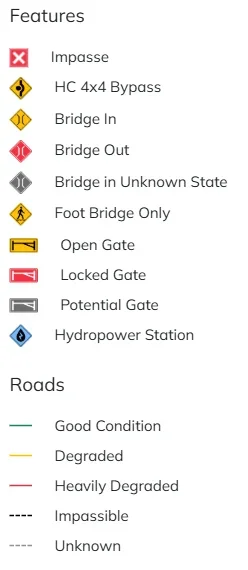
BC Backroad Status
![map legend]()
Service Road Atlas is a free to use, community-driven service for viewing and creating reports on the numerous back-country service roads around B.C. and Alberta.
Slope Aspect
Direction the slope faces
Trails Deemphasized
Trails are shown in grey.
Only show trails with no bike usage.
Suggested Layers
Based on selected activity type
Save the current map location and zoom level as your default home location whenever this page is loaded.
SaveHollister Hills State Vehicle Recreation Area (SVRA) is California State Parks’ first SVRA. Located in the Gabilan Mountains, just an hour’s drive south from San Jose, this unique SVRA features over 6,800 acres of scenic and varied terrain. Visitors are drawn to the natural beauty of the park’s oak woodlands, rolling hills, lush canyons, and seasonal creeks with elevations ranging from 660 feet to 2,425 feet. Hollister Hills SVRA offers numerous off-highway vehicle (OHV) opportunities as well as designated hiking, bicycling, and equestrian trails.
The park straddles the San Andreas Fault. The North American tectonic plate (North East side) consists of clay-rich adobe soil with rolling hills covered in grassland and oak woodlands. The Pacific tectonic plate (South West) consists of granitic soil with steeper terrain with pine, sage, and chaparral taking root in the sandy soil. The Pacific and North American tectonic plates have been sliding past each other for 30 million years at a current rate of about 1.5 inches per year. To read more about this geological gem, click here.
The park straddles the San Andreas Fault. The North American tectonic plate (North East side) consists of clay-rich adobe soil with rolling hills covered in grassland and oak woodlands. The Pacific tectonic plate (South West) consists of granitic soil with steeper terrain with pine, sage, and chaparral taking root in the sandy soil. The Pacific and North American tectonic plates have been sliding past each other for 30 million years at a current rate of about 1.5 inches per year. To read more about this geological gem, click here.
- Activities:
-
- Mountain Bike
- Dirtbike/Moto
- ATV/ORV/OHV
